
HOA Considerations for Retractable Awnings and Screens in Jacksonville
Adding a motorized retractable awning or screen to your patio, porch, or lanai is one of the smartest outdoor upgrades a Northeast Florida homeowner can make — blocking insects, cutting heat, and extending the time you enjoy your outdoor space. But before the first bracket is mounted, one question comes up almost every time: Do I need HOA approval?
The answers depend on where you live and how your project is configured. This guide breaks down both so you can move forward confidently whether your home is in Jacksonville, Duval County, Clay County, St. Johns County, St. Augustine, Jacksonville Beach, or Ponte Vedra.
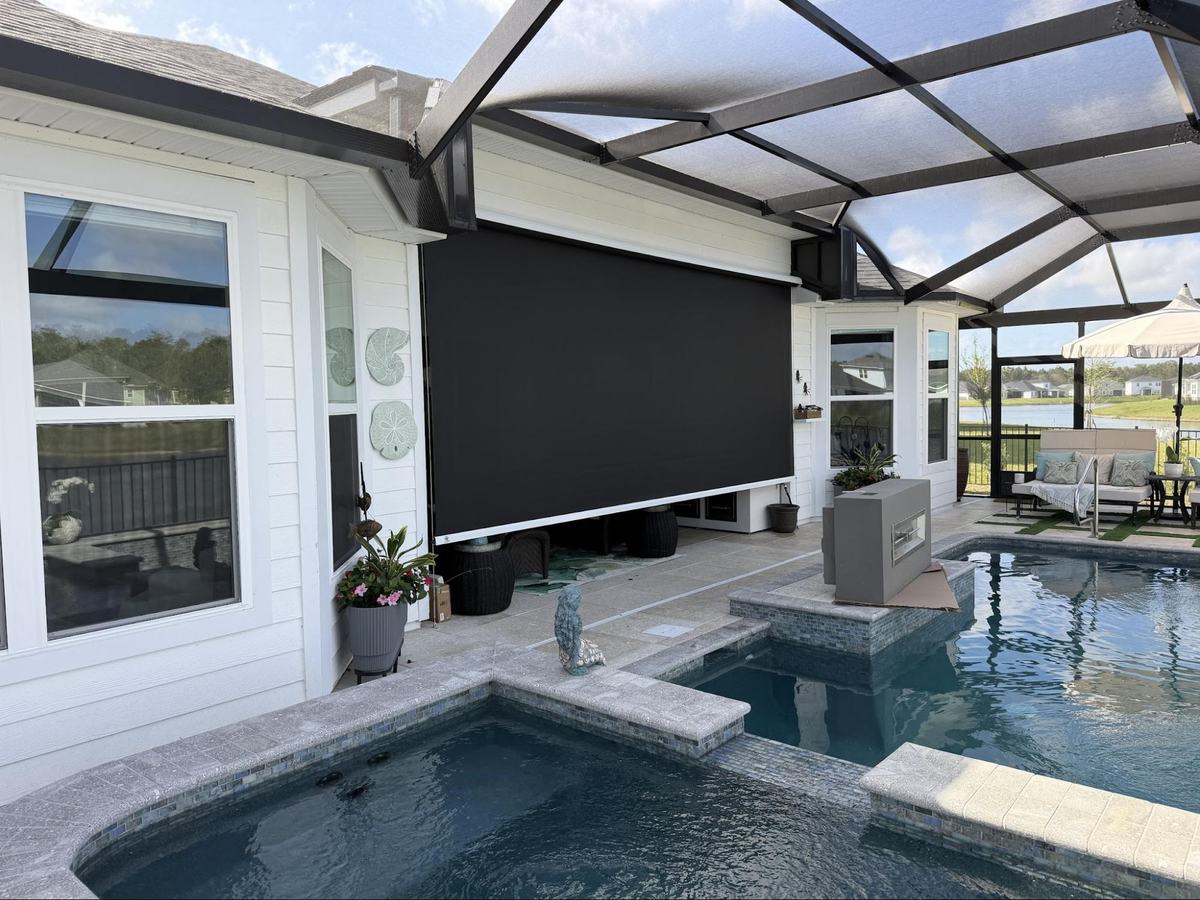
Motorized shade screen in pool enclosure for added UV protection
Do You Need HOA Approval?
If your home is in a community governed by a homeowner’s association, the short answer is almost certainly yes — at least for any installation visible from the street, neighboring properties, or common areas.
HOAs in Florida are authorized under Chapter 720 of the Florida Statutes to regulate exterior modifications to homes in their communities. Their primary goal is maintaining a consistent aesthetic and protecting property values. Awnings and motorized screens, because they alter the visible exterior of a home, fall squarely within that jurisdiction.
That said, retractable systems tend to fare much better with HOA boards than permanent fixed structures. Because they retract and do not permanently alter the look of a home, many associations that prohibit fixed awnings specifically allow retractable ones — often with conditions around color, frame finish, and placement. One Northeast Florida HOA's guidelines, for example, allow retractable roller-style awnings on the rear of the home in neutral colors with white or bronze frames while prohibiting permanent awnings of any material entirely.
What HOAs Typically Review
When you submit an Architectural Review Committee (ARC) request for a motorized awning or screen, expect your HOA to evaluate the following:
- Placement: Most HOAs restrict awnings and screens to rear or side elevations not visible from the street. Front-of-home installations are commonly denied.
- Color and fabric: Neutral tones that complement the home's existing exterior palette are strongly preferred. Bright or patterned fabrics are frequently flagged.
- Frame finish: White and bronze are the most approved frame colors. Always check your community's specific guidelines.
- Dimensions: Some HOAs limit how far an awning may project from the structure.
- Contractor information: Many ARCs require documentation showing the installer is licensed and insured.
- Product specifications and drawings: A written description alone is rarely enough. Scaled drawings or product spec sheets are standard.
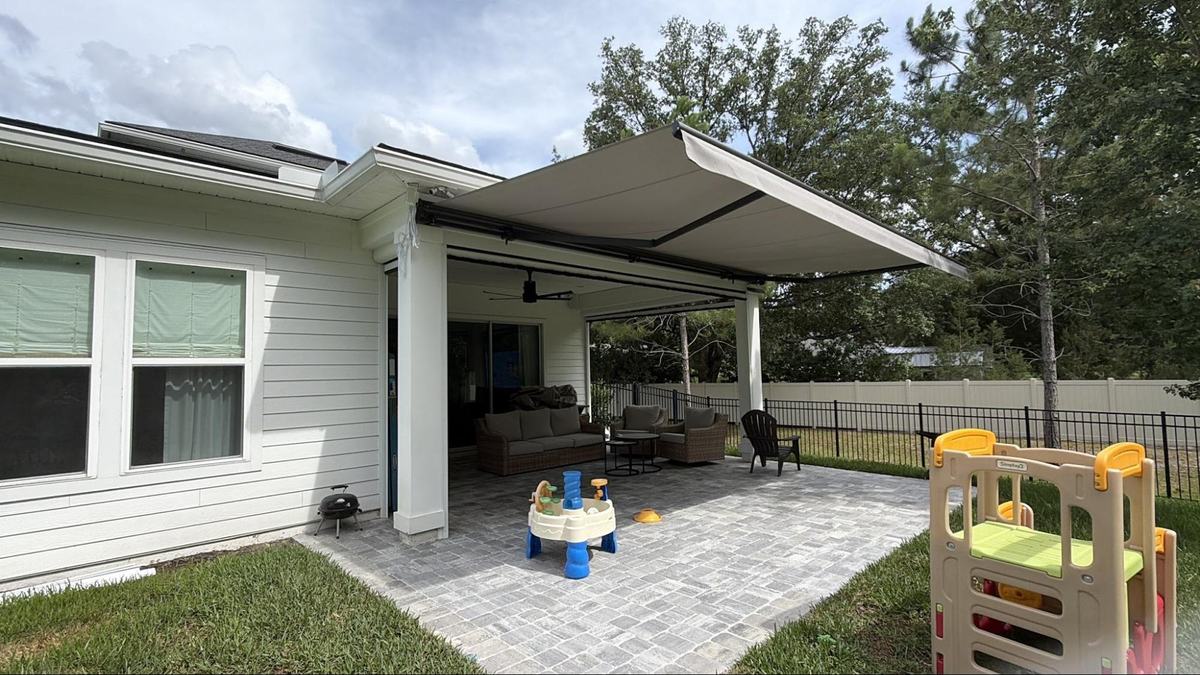
Beige retractable awning over paver patio with kids toys and patio furniture
How Florida’s 2024 HOA Law Changes Things
Florida homeowners gained meaningful new protections when the legislature amended Florida Statute 720.3035 in 2024. Under House Bill 1203, HOA architectural review boards must now cite specific clauses from their governing documents when denying any application for aesthetic reasons — vague or subjective denials are no longer permissible. Additionally, HOA boards that “unreasonably, knowingly, and willfully” infringe on a homeowner's rights now face potential damages and attorney's fee exposure.
House Bill 293 went further, requiring every HOA in Florida to adopt hurricane protection specifications for parcels in its community and prohibiting boards from denying applications that comply with those specifications. For motorized retractable awnings and screens — which retract automatically in high winds and reduce wind-load exposure — this legislative direction is favorable.
The practical takeaway: Florida HOAs still have broad authority over exterior modifications, but their decisions must be grounded in documented rules, applied consistently, and reached within a reasonable timeframe. If your application is denied, you now have clearer grounds to request a written explanation and, if needed, to appeal.
Tips for Getting HOA Approval
- Always apply in writing. Verbal approvals carry no legal weight. Submit a formal ARC request and keep copies of everything.
- Read your CC&Rs and architectural guidelines first. Your community's Covenants, Conditions, and Restrictions are the controlling document. Know what they say before you apply.
- Submit complete documentation. Include product drawings, fabric color swatches, frame finish samples, and your contractor's license information. Incomplete applications are the most common cause of delays.
- Choose neutral, HOA-friendly aesthetics. Retractable systems in neutral tones with clean cassette housings present well to review boards and are far less likely to prompt a denial.
- Don't start work before approval. Installing without HOA sign-off can result in fines, forced removal, and the cost of materials you can no longer use — with no reimbursement.
- Follow up politely. If you don't receive a response, silence does not mean approval. Confirm the status of your application in writing.
Why Working with a Licensed, Local Installer Matters
Navigating HOA approval processes is a significant part of what separates a professional installation from a DIY project gone sideways. An experienced local installer will:
- Provide the product documentation, drawings, and spec sheets your HOA needs to process an ARC application
- Stand behind the work with proper licensing and insurance, which many HOA applications require you to document
Skipping these steps creates real risk, such as forced removal orders from your HOA.
Ready to Move Forward? Cheetah Screens Makes It Simple.
At Cheetah Screens, we specialize exclusively in motorized retractable awnings and screens — and that focus means we understand HOA guidelines across Jacksonville, Duval County, Clay County, St. Johns County, St. Augustine, Jacksonville Beach, and Ponte Vedra. We supply the product documentation your HOA needs.
If you’re ready to transform your patio, porch, or lanai into a space you’ll actually use year-round, get your free quote today or call us at (904) 754-7826. We’ll walk you through design options, help you prepare your HOA application, and handle the details from measurement to final walkthrough — so you can focus on enjoying your outdoor space, not navigating the paperwork.
We proudly serve homeowners throughout Duval County, Clay County, St. Johns County, St. Augustine, Jacksonville, Jacksonville Beach, and Ponte Vedra.
Note: HOA rules and requirements change over time and vary by community. This guide is intended as general information. Always verify current requirements with your HOA and before beginning any installation.